


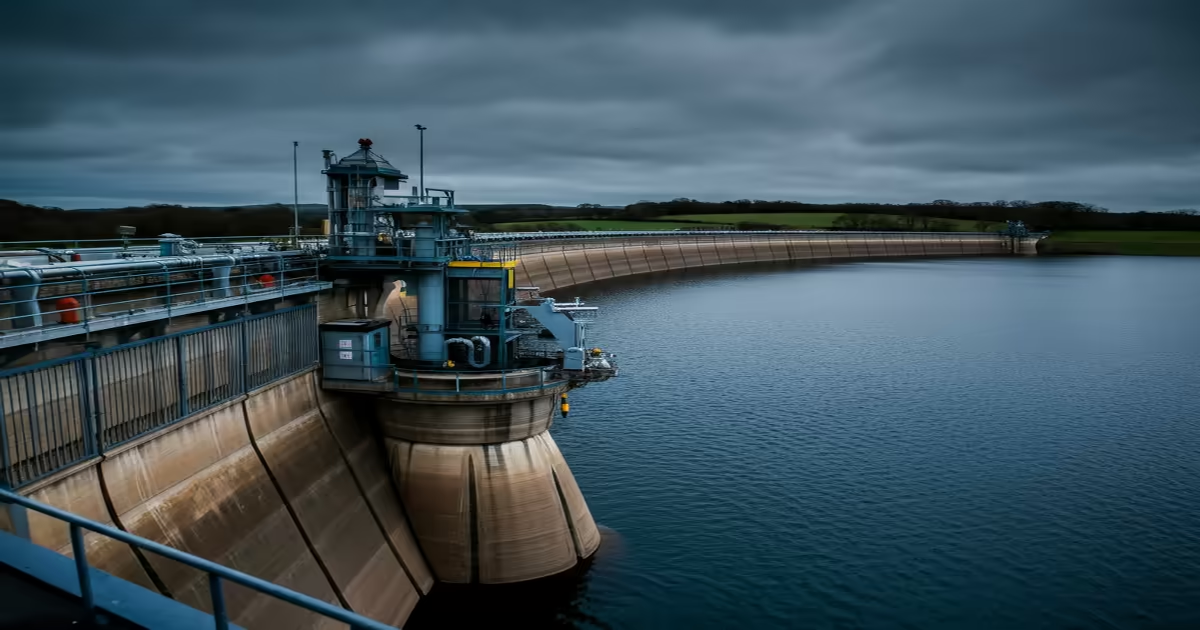
A new reservoir initiative in Oxfordshire, designed to enhance water resources in South East England, has seen its projected costs balloon to £7.5 billion, more than three times the initial budget. Thames Water announced this updated financial estimate recently as part of its ongoing regulatory submissions related to the South East Strategic Reservoir Option (Sesro) project. The increase in costs follows three years of thorough technical planning, design revisions, and environmental evaluations, with the original estimate set at £2.2 billion.
The planned reservoir will be established near Abingdon and will serve as a substantial storage facility, with the capacity to hold around 150 billion litres of water. It is intended to capture excess water during the winter months from the River Thames, allowing it to be treated or reintroduced into the water distribution system during peak demand or drought conditions. Thames Water indicated that this new cost estimate reflects current market prices to prevent underfunding as they move into the procurement phase.
According to the current proposal, nearly half of the costs associated with the reservoir will be passed on to Thames Water's 16 million customers in London and the surrounding areas. Meanwhile, customers from Affinity and Southern Water will shoulder the remaining costs. This cost hike comes as Thames customers are already anticipating a significant increase in their water bills, projected at 35% over the next five years, with other companies' clients facing potentially larger price hikes.
Chancellor Rachel Reeves has previously committed to the construction of nine new major reservoirs, marking the first such projects in the UK in over three decades. Officials have endorsed the Abingdon scheme, noting it will help address an expected water shortfall of nearly one billion litres daily by 2050. However, local residents, environmental activists, and some council members have expressed strong opposition, voicing concerns over the enormity of the reservoir, heightened flood risks, potential loss of natural land, and its overall environmental consequences.
Nevil Muncaster, Thames Water's strategic director for water resources, stressed the importance of the reservoir in ensuring adequate water supply in the future. He highlighted that the published Gate Three report signifies a key step in advancing the project and reflects the comprehensive work undertaken to refine the design and understand the delivery requirements. He also mentioned the company's intention of drawing insights from other sizable UK projects to inform their approach. The reservoir is considered vital for meeting the anticipated water demands in the region and forms a crucial part of Thames Water's long-term strategy for water resource management in the coming decades.

5 Comments
Rotfront
The financial irresponsibility here is staggering! £2.2 billion to £7.5 billion? Where did that extra money go?
Donatello
It’s time to prioritize community needs over expensive infrastructures that don’t promise any real solution.
Raphael
Why not focus on saving and reusing water rather than constructing such an enormous reservoir that won't solve the fundamental issue?
Leonardo
In light of climate change, we need innovative solutions like this to manage our resources effectively. I’m all for it!
Coccinella
Supporting this project means supporting our community! A stable water supply is essential for growth and prosperity.