


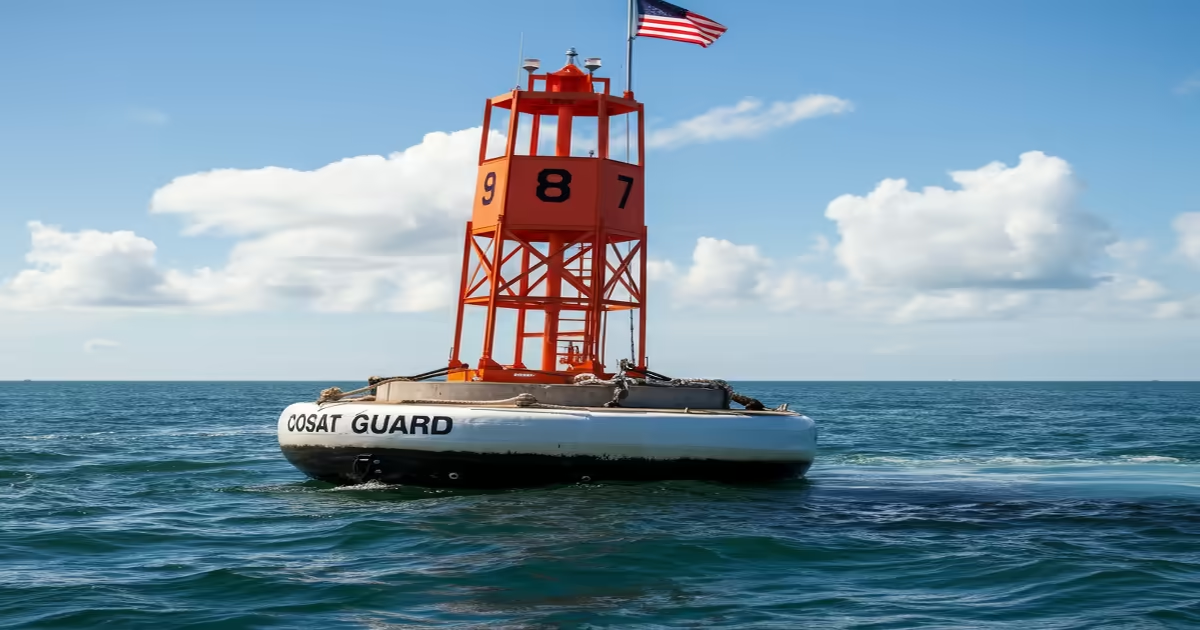
The Coast Guard proposed removing 350 navigational buoys from Maine to New Jersey, citing advancements in electronic navigation tools over several decades. This proposal has sparked debate among those who rely on these buoys for safety.
Many coastal residents have a strong connection to the Coast Guard buoys. These steel structures, painted red or green, stand tall above the water, often resembling miniature lighthouses. Their names, derived from their locations, evoke a sense of maritime history. Many are illuminated at night, and some emit distinct sounds like whistles or moans to alert approaching vessels in poor visibility.
One sailor recalled a foggy night when the sound of a buoy's bell helped him realize he was off course, preventing a potential accident. The Coast Guard acknowledges the emotional attachment to these buoys but emphasizes that decisions about their removal must be based on practicality. The agency's mandate is to refine the system using its experience.
The Coast Guard released a list of buoys slated for removal, prompting a significant public response. The agency plans to revise the list, considering feedback from boaters. The goal is to "right-size" the system, not to cut costs, although maintenance is expensive. The system's origins date back to colonial times. While some buoys may be redundant, many boaters are concerned about the removal of those that help them avoid danger.
Some of the buoys on the removal list mark sites of past maritime disasters. One such buoy off Plymouth, Massachusetts, marks the location of the Mary Ann Rocks, where Coast Guard crewmen died in 1928. The rocks have a long history of threatening boats.
A local resident whose grandfather helped with the rescue efforts after the 1928 shipwreck questioned the decision to remove the buoy, emphasizing the Coast Guard's mission to ensure safety. History shows that even with buoys, accidents can still occur.

5 Comments
Matzomaster
Let's not get sentimental. Progress demands change. They're "right-sizing," not getting rid of all buoys.
Rotfront
I sail these waters regularly. Those buoys are vital for low-visibility situations. No GPS can replace that feeling of security.
BuggaBoom
Modern technology is incredibly reliable. We've advanced, and relying solely on buoys is outdated.
Karamba
This is about efficiency and safety. The Coast Guard has the data to make informed decisions.
Coccinella
The removal of buoys is no reason to fear for your safety. The Coast Guard exists to serve and protect, and this is part of their duty.